Garden Planning
Companion Planting in Containers Without the Myths
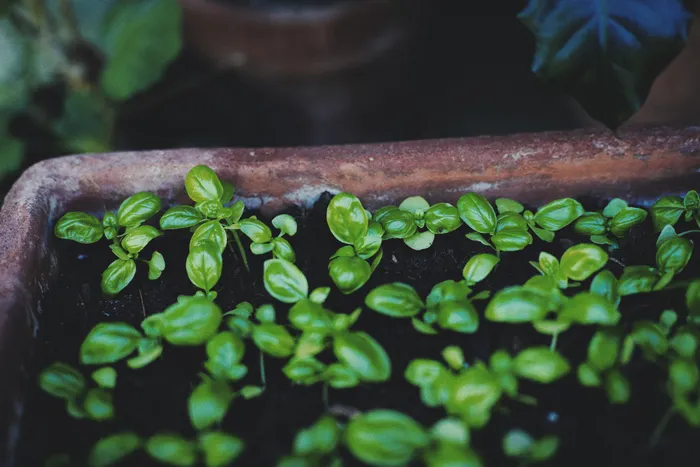
Companion planting is often presented as a chart in which one plant magically protects or improves another. Container gardeners need a more practical definition. Plants are good companions when their mature size, season, light exposure, root space, and care needs allow them to share limited space without creating avoidable competition.
Start with water needs. Basil and a compact tomato both prefer consistent moisture, so they can sometimes occupy a sufficiently large container if neither is crowded. Rosemary prefers a drier, faster-draining root zone and is a poor match for that same arrangement. Mint grows vigorously through a pot and can overwhelm slower herbs, even though it appears beside many plants on popular companion lists. Physical behavior matters more than a generalized pairing.
Consider timing as well as size. Radishes can mature between young lettuce plants before the lettuce expands. Scallions may fit around the edge of a deep box. Fast baby greens can occupy open soil early in a tomato's season, but they should be removed as the tomato canopy grows and its roots demand more water. This is planned succession and space sharing, not evidence that one crop chemically improves the other.
Flowers can provide a genuine service by offering resources to pollinators and some beneficial insects. Compact calendula, alyssum, or regionally suitable native flowers may fit near edibles, but they still use soil, water, and light. Select plants appropriate for the local climate and avoid species that are invasive in the region. A flower does not guarantee pest control, and attracting insects is not a substitute for inspecting crops.
Be skeptical of claims that an herb's scent will completely repel pests or that a specific pair will dramatically change flavor. Plant aromas may influence insect behavior under some conditions, but a few leaves in a balcony pot do not create a protective force field. Good sanitation, healthy plants, accurate identification, airflow, and timely physical control remain more dependable.
Shared containers also complicate maintenance. If one plant develops a severe disease, intertwined roots and foliage make isolation difficult. Different harvest dates may leave a large empty root mass after one crop is removed. Fertilizer suitable for a fruiting vegetable may be unnecessary for a restrained perennial herb. Beginners often learn faster by keeping major crops in separate pots and grouping the containers visually.
When testing a mixed planting, draw the mature footprint first. Confirm adequate soil volume for the largest plant, give each crop its minimum spacing, and leave access for watering and harvest. Pair plants from the same seasonal window and monitor which one dominates. If leaves overlap heavily or one plant wilts sooner, separate them rather than defending the original plan.
Companion planting is useful when it becomes thoughtful, observable container design. Compatible care, complementary timing, efficient use of vertical layers, and useful flowers can make a balcony more productive. Measure success by plant health, harvest, and maintenance effort, then keep notes about combinations worth repeating. Careful observation matters. This record improves future decisions. Myth-based promises cannot replace those fundamentals.