What to Grow
Growing Strawberries in Pots and Railing Planters
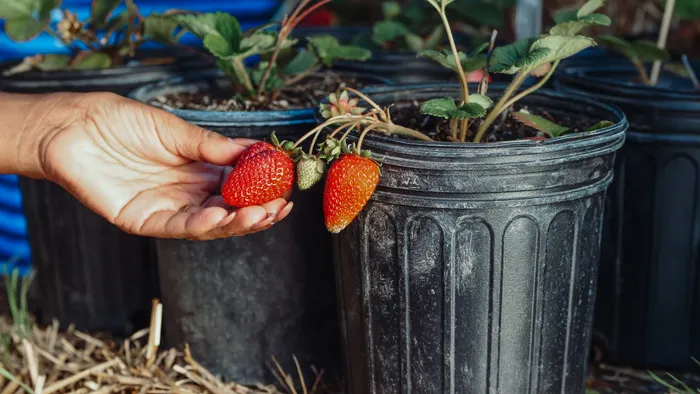
Strawberries combine ornamental foliage, flowers, and edible fruit in a compact plant, which makes them appealing for balconies. They are not maintenance-free, however. Small containers dry quickly, fruit attracts birds, and different strawberry types follow different production schedules. Choosing the right plant and giving its crown proper treatment makes the project much more predictable.
June-bearing strawberries produce one main crop over a relatively short period, with timing that depends on climate and variety. Everbearing and day-neutral types can flower and fruit in several flushes when temperatures are suitable. Day-neutral plants are often convenient for containers because they can produce through more of the season, but they still slow under stressful heat or cold. Buy named, healthy plants from a reputable nursery rather than transplanting unidentified runners from land where disease history is unknown.
Use a pot, window box, hanging basket, or securely installed railing planter with several drainage openings. Wider containers allow multiple plants while preserving reasonable spacing. Very small strawberry jars can be difficult to water evenly. Fill the container with quality potting mix and position each plant so the crown—the short central point where leaves meet roots—sits at the soil surface. Burying the crown encourages rot, while leaving roots exposed causes them to dry.
Provide generous light for flowering and fruiting, with protection from extreme reflected heat where needed. Water when the upper mix begins to dry, applying moisture to the soil rather than repeatedly soaking flowers and fruit. Strawberries have relatively shallow roots, so check railing planters and hanging baskets often in windy weather. A light mulch of clean straw or another appropriate material can keep fruit off wet soil and reduce splashing.
Feed conservatively with a product labeled for edible container plants. Excess nitrogen favors leaves and runners over fruit. Remove damaged foliage and keep the container clear of rotting berries. Runners are long stems that form daughter plants. Root a few into small adjacent pots if new plants are wanted, or remove them so the parent directs more energy toward fruiting. Use clean scissors rather than tearing them away.
Flowers need pollination. Outdoor insects often do the work, but a sheltered high balcony may receive few visitors. On dry days, gently brush across open flowers with a small clean artist's brush, moving among blossoms. Misshapen berries can result from incomplete pollination, weather stress, or feeding damage; one odd fruit does not diagnose a larger problem.
Bird netting may protect ripening berries, but it must be taut, visible, and secured so birds cannot become trapped. Inspect it daily. Harvest fruit when it is fully colored for the variety and separates with a gentle pull, preferably during a cool part of the day. Remove spoiled fruit promptly.
Winter treatment depends on regional cold and the container's exposure. Roots in pots are less insulated than roots in the ground. Consult regional extension guidance for the selected variety and climate before assuming a planter can remain exposed. Whether grown for one season or carried through winter, strawberries reward careful crown placement, steady moisture, and frequent small harvests.